| |
 |
Manuel Mendive (b. 1944)
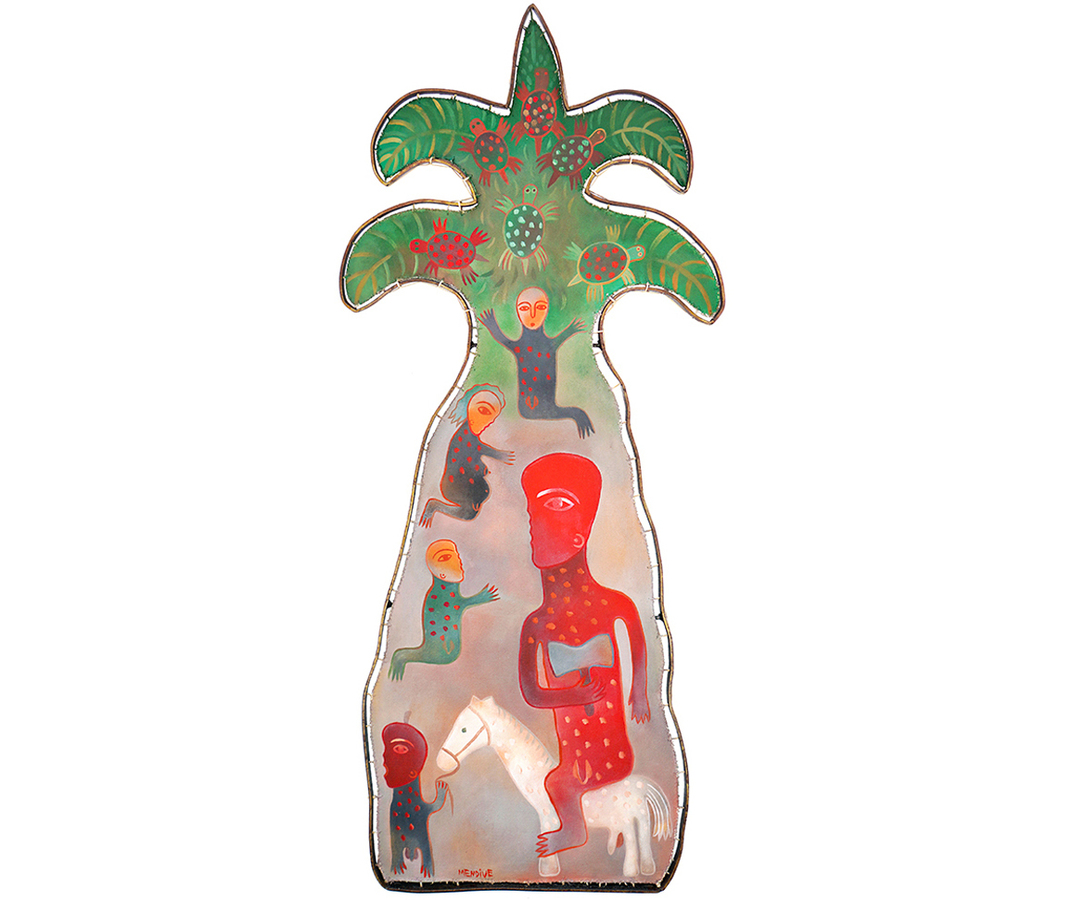
The Palm Tree and Shango
(La Palma y Shangó), ca. 1996
acrylic on canvas and sculptured iron frame
66 x 28 ½ x 1 inches
Illustrated in IMPORTANT CUBAN
ARTWORKS,
Volume Seventeen,
page 106.
The Palm Tree and Changó, a one-of-a kind
painting/sculpture, was exhibited in the event
The African Odyssey, The John F. Kennedy Center,
Washington D.C., in 1999. In this show, Manuel
Mendive presented three performances, one of
which was dedicated to Changó (the King of Kings
in the Yoruba religion.)
The artist chooses the form of a Royal Palm
Tree for the rendition, as this plant is the
most elevated and revered Cuban flora, also
being the vegetation that is formally identified
with this deity by the practitioners of the
Lucumí. In the superior plane of the work’s
composition, the artist depicts the lush crown
of the tree, (also known as the palmiche), in
jungle greens with touches of reds and oranges.
Six turtles inhabit the crown, six being the
numerology that identifies Changó.
The kneeling figures, pleading and praying,
symbolize the fervent convictions of the Yoruba
believers, as they implore to the grandiose
Deity in Red, (Changó’s color), riding its
customary white horse and wielding the double-
edged ax, a symbol of his power and authority.
Eleggua, an Orisha of lesser rank, known in the
Santería as the “owner” of the roads and maker
of the paths, gently leads the horse of the King
by the bridle.
We are grateful to
DR. GUILLERMINA RAMOS CRUZ
for having shared her analysis of this artwork.
|
|
|
| |
| |
| |
| Copyright 2002-2025, Cernuda Arte. All Rights Reserved |
| |
|
|